

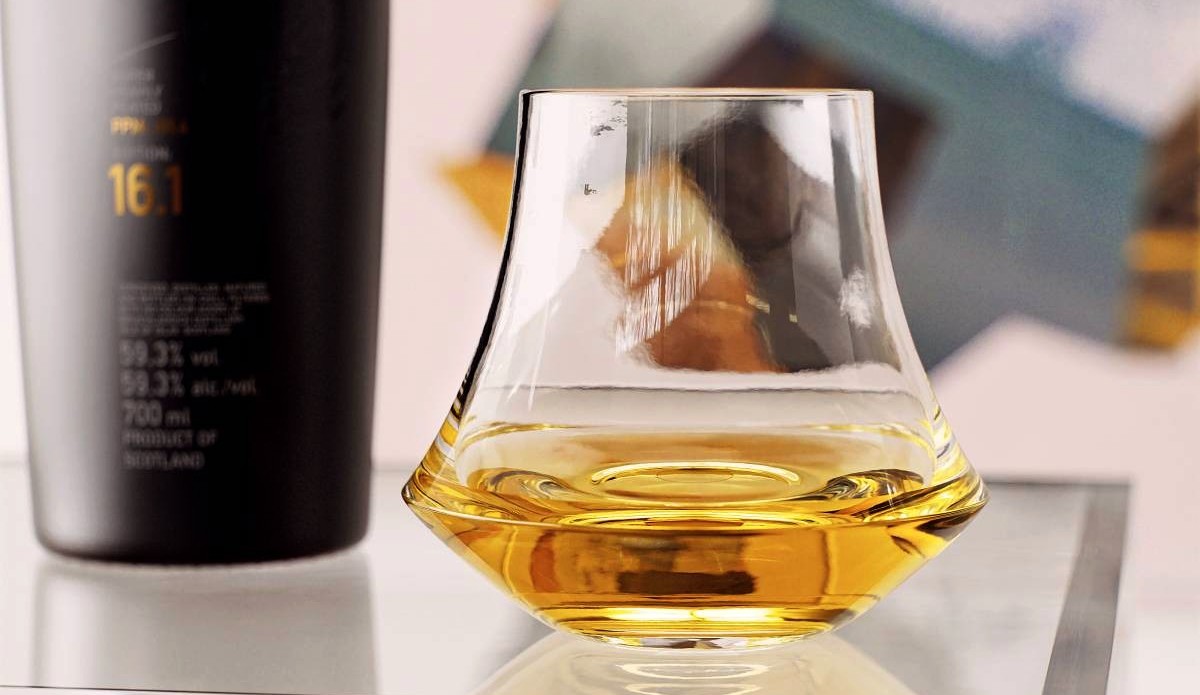
Few whiskies have challenged accepted thinking quite like Octomore. Since its conception in the early 2000s, followed by the inaugural series release in 2008, the Bruichladdich-produced Islay single malt has made a habit of unseating long-held assumptions about peat, age, strength, and balance. With the release of Octomore Series 16, the distillery once again demonstrates why this fiercely experimental label continues to command attention and appeal to connoisseurs around the world – well beyond its extreme numbers.
To understand Octomore, it helps to look back to its beginnings under the guidance of Jim McEwan, Bruichladdich’s legendary former master distiller and master blender, who retired from Bruichladdich in 2015, though was drawn out of retirement just 18 months later to help kick-start the then-new Islay distillery, Ardnahoe. When McEwan revived Bruichladdich in 2001, he did so with a clear philosophy: transparency, provenance, and a willingness to question convention. Octomore emerged as a provocation — a deliberately young, heavily peated whisky designed not to overwhelm the drinker, but to prove that high phenol levels could still deliver clarity, balance, and nuance.
That idea — what the distillery has long referred to as “the Impossible Equation” — remains at the heart of Octomore today. Each annual release asks the same questions: how far can peat be pushed, how young can a whisky be, and how high can the alcohol climb, without sacrificing drinkability?
SERIES 16: THREE EXPRESSIONS, ONE PHILOSOPHY
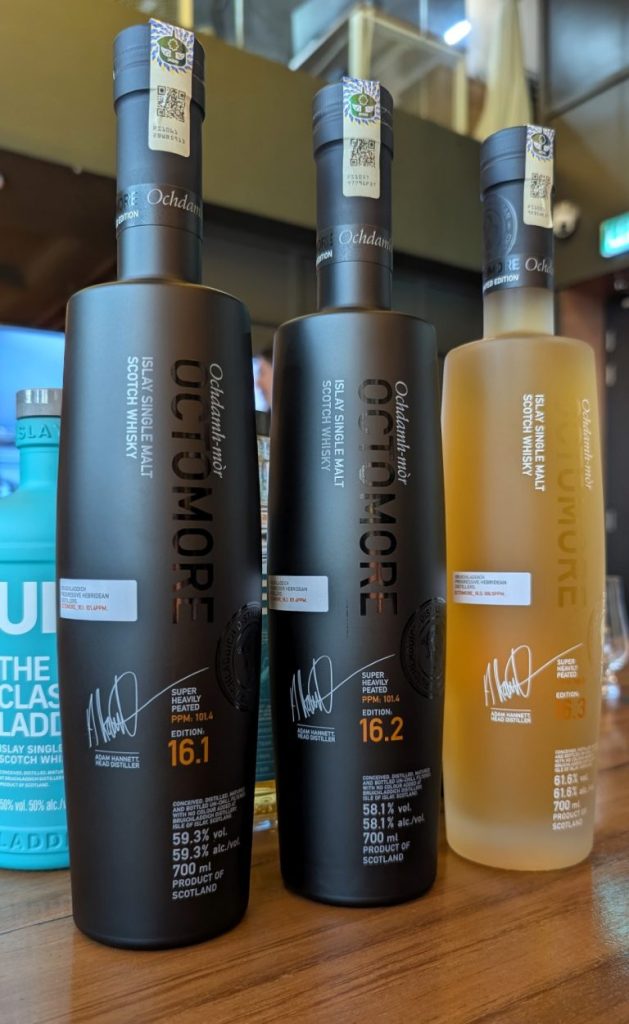
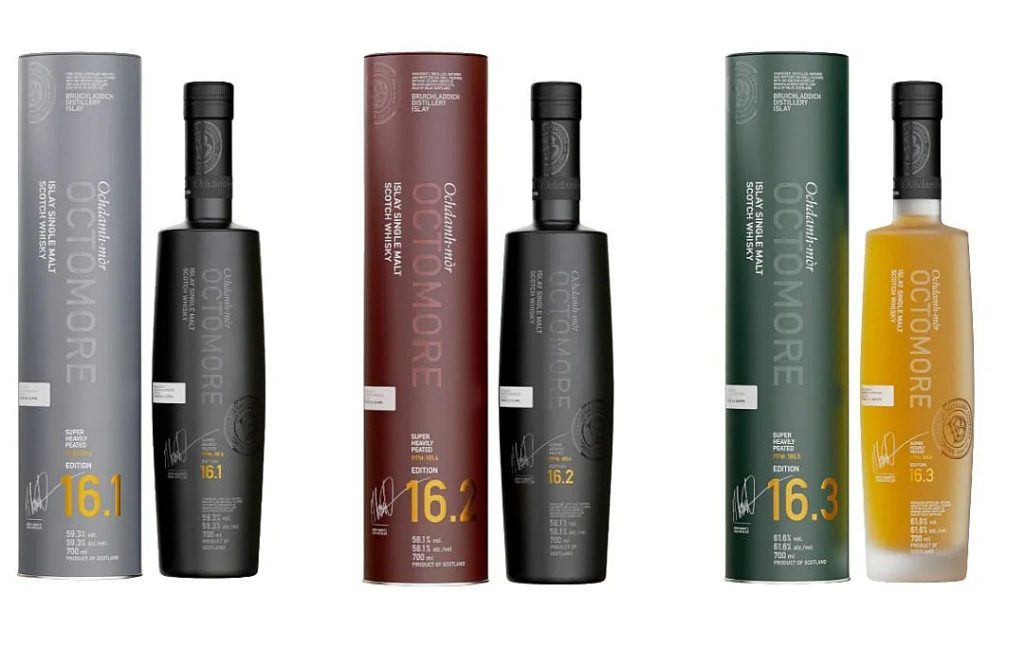
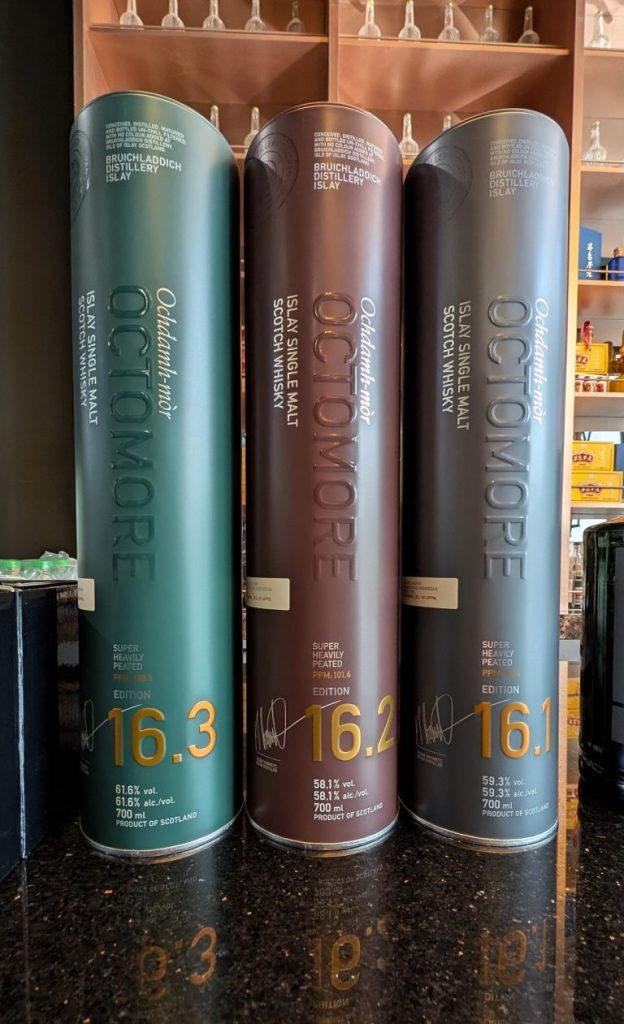
Octomore Series 16 arrives as a trio of five-year-old single malts, each exploring a different angle of peat, cask influence, and raw material. All three are distilled, matured, and bottled on Islay, bottled at near cask strength, un-chill filtered, and free from added colour. The differences lie in the details — barley source, cask selection, and phenol levels that range from already formidable to eye-watering.
Bruichladdich’s current Master Blender Adam Hannett, who worked closely with McEwan before taking on the role himself, sees Octomore as both a responsibility and a creative playground.
“Octomore exists to provoke and challenge,” Hannett says. “On paper, it shouldn’t really work — it’s too young, too strong, and too peaty. But each release continues to surprise with its depth and flavour.”
OCTOMORE 16.1: THE BENCHMARK
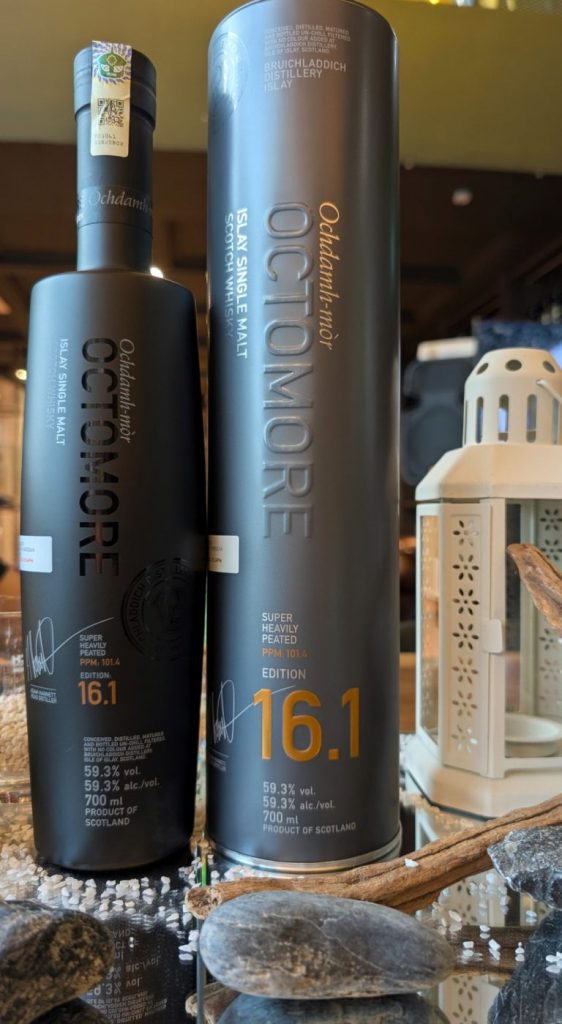
Every Octomore series begins with a reference point, and 16.1 fulfils that role. Made using 100% Scottish mainland Concerto barley peated to 101.4 PPM, it is matured for five years in first-fill bourbon barrels and bottled at 59.3% ABV.
This is Octomore in its most direct form: peat-forward, yes, but far from aggressive. Dry campfire smoke leads, followed by salted caramel, honeyed melon, apricot, and gentle notes of coconut and chocolate. There is a mineral undercurrent that anchors the sweetness, and the smoke lingers rather than dominates. It is a reminder that Octomore’s reputation rests not on shock value alone, but on balance.
OCTOMORE 16.2: CASKS TAKE CENTRE STAGE
If 16.1 establishes the baseline, 16.2 explores how cask selection reshapes the same spirit. Using identical distillate and age statement, this expression is bottled at 58.1% ABV and matured across an ambitious mix of Oloroso, Bordeaux, Madeira, and Portuguese Moscatel casks — a combination never previously used for Octomore.
The result is richer and more indulgent. Sweet smoke wraps around caramelised sugar, roasted nuts, and dried fruits, with wine-led depth adding weight and texture. The peat remains unmistakable, but it plays a supporting role to the cask-driven complexity.
For Hannett, releases like 16.2 reflect Bruichladdich’s willingness to take risks. With access to one of the industry’s most diverse cask inventories, Octomore becomes the ideal vehicle for testing how far those boundaries can be pushed.
OCTOMORE 16.3: ISLAY, AMPLIFIED
The most distinctive expression in the line-up is Octomore 16.3, a single-farm, single-field, single-vintage whisky made entirely from barley grown at Octomore Farm on Islay. Malted to a formidable 189.5 PPM and bottled at 61.6% ABV, it is matured for five years in a combination of bourbon, Sauternes, and Pedro Ximénez casks.
Despite its towering specifications, 16.3 is less about raw power than about place. Honeyed malt, toasted grain, and an earthy cereal character form the backbone, with salinity and smoke woven through rather than layered on top. The influence of Islay-grown barley is unmistakable.
“For me, whisky should evoke a sense of place,” Hannett notes. “The cereal-forward notes of 16.3 speak directly of its island origins.”
WHY OCTOMORE STILL MATTERS
Nearly two decades on from its first release, Octomore remains one of the whisky world’s most closely watched annual launches. Not because it is louder than everything else, but because it continues to ask difficult questions — about age statements, raw materials, and what drinkers think they want from peated whisky.
Series 16 reinforces that Octomore is not a gimmick. It is a long-running experiment, grounded in serious distilling, careful cask management, and a clear sense of identity. The numbers may grab the attention, but it is the flavour — and the confidence behind it — that keeps enthusiasts coming back year after year.
AVAILABILITY IN MALAYSIA
Octomore Series 16 — including 16.1, 16.2, and 16.3 — is now available in Malaysia through selected retailers:
KL & Selangor
Zeye Able (016-564 9235)
The Chamber (012-400 3933)
Penang
Tipsy Time Liquor Store (010-226 1124)
Ipoh
Eastern Wine (012-463 7800)
For more information, visit bruichladdich.com.