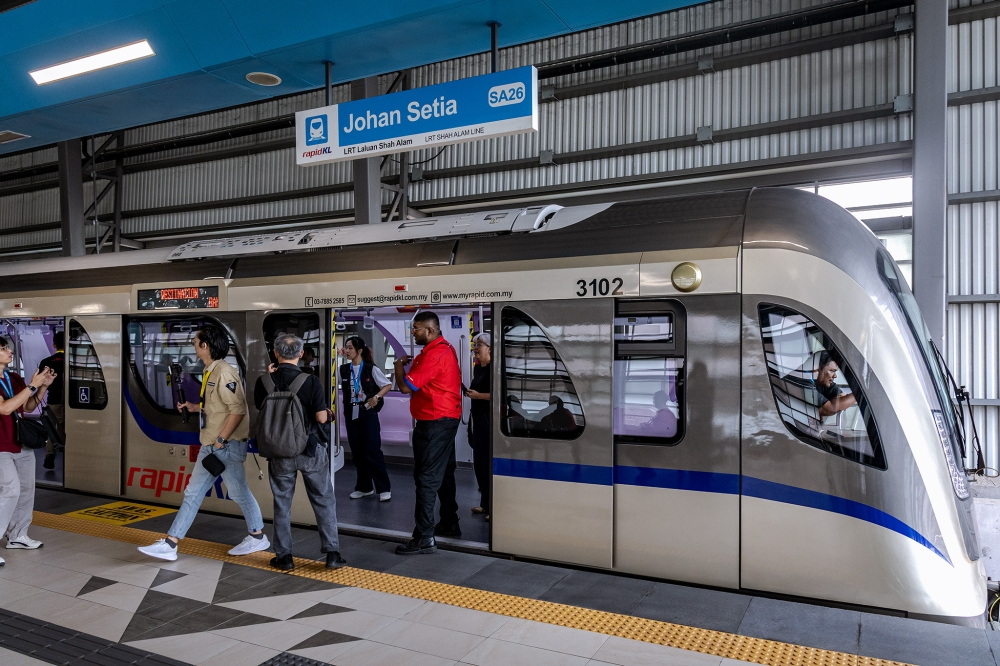



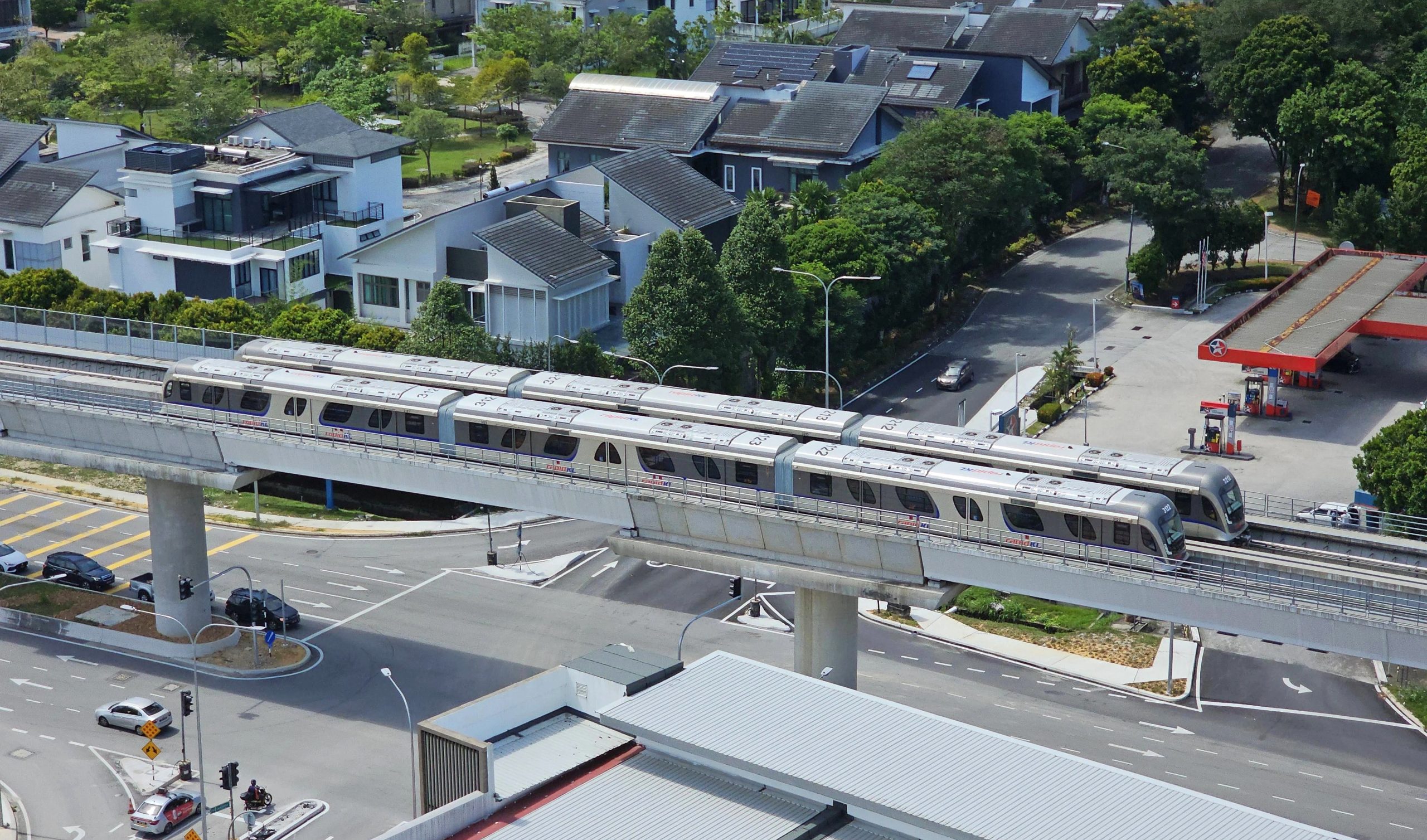
After years of anticipation and a series of delays, the LRT3 Shah Alam Line officially entered service today, with Prime Minister Datuk Seri Anwar Ibrahim launching operations and announcing one month of free travel to encourage public uptake.
For thousands of commuters across Klang, Shah Alam, and Petaling Jaya, today marks the beginning of a long-awaited new chapter in public transport.
The LRT3 Shah Alam Line officially commenced passenger operations this morning after Prime Minister Datuk Seri Anwar Ibrahim launched the RM16.63 billion project at the Johan Setia Depot yesterday, describing the new line as a key investment in improving urban mobility and easing congestion across one of the Klang Valley’s busiest corridors. As an added incentive, all rides on the new line – along with its dedicated feeder bus services – will be free until July 31.
The launch brings into service a 37.8-kilometre line linking Johan Setia in Klang with Bandar Utama in Petaling Jaya, passing through Shah Alam and Subang. Twenty stations are now operational, creating a much-needed east-west rail connection that has been absent from the Klang Valley’s expanding transit network for decades. The line also provides convenient interchanges with the Kelana Jaya LRT Line at Glenmarie and the MRT Kajang Line at Bandar Utama, allowing commuters to continue seamlessly into Kuala Lumpur and other parts of the Klang Valley.
The project has experienced a longer journey than originally anticipated. Initially expected to begin operations more than a year ago, the opening was pushed back following additional system testing and commissioning to ensure operational readiness. While the delays frustrated many commuters eager for improved transport options, Transport Minister Anthony Loke maintained that safety and reliability would take precedence over meeting earlier target dates.
Today, those years of construction and testing have finally given way to passenger service.
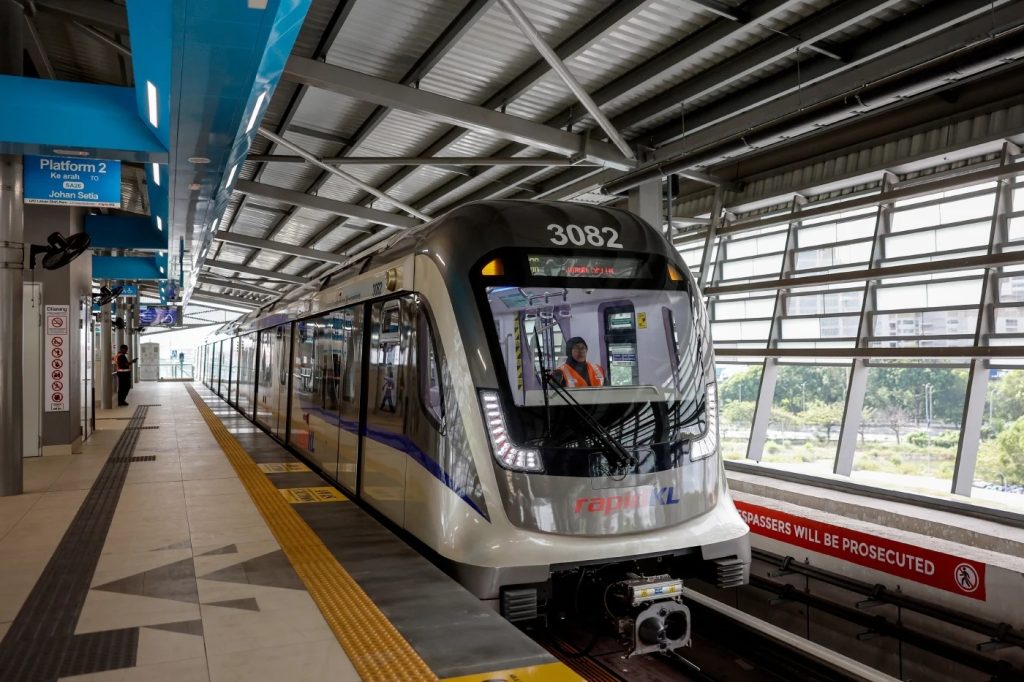
CONNECTING COMMUNITIES
For residents of Klang and Shah Alam in particular, the new line promises a viable alternative to daily traffic congestion along major routes such as the Federal Highway, NKVE, and Guthrie Corridor Expressway.
Prasarana estimates that approximately two million people live along the corridor served by the LRT3, with initial daily ridership expected to reach around 67,000 passengers before growing substantially over the coming years as surrounding developments mature and commuters adjust their travel habits.
The new service is supported by an extensive network of 40 feeder buses operating across 13 routes, together serving more than 300 bus stops. Rapid On-Demand vans are also available across multiple service zones, helping extend first- and last-mile connectivity beyond the rail corridor itself. During the free travel period, feeder bus services on the Shah Alam Line will also operate at no charge.
Speaking at the launch ceremony, Anwar said the free travel initiative was introduced following discussions between the Transport Ministry and the Ministry of Finance, acknowledging that while the programme carries an immediate cost, encouraging greater use of public transport will deliver long-term economic and social benefits. He also described the corridor as one of the country’s most heavily congested, making improved public transport a priority.
The current line includes 20 operational stations, while five additional stations that were previously deferred under cost rationalization plans remain scheduled for future completion under a second phase of expansion. The government has already committed funding for these stations together with additional rolling stock and supporting infrastructure.
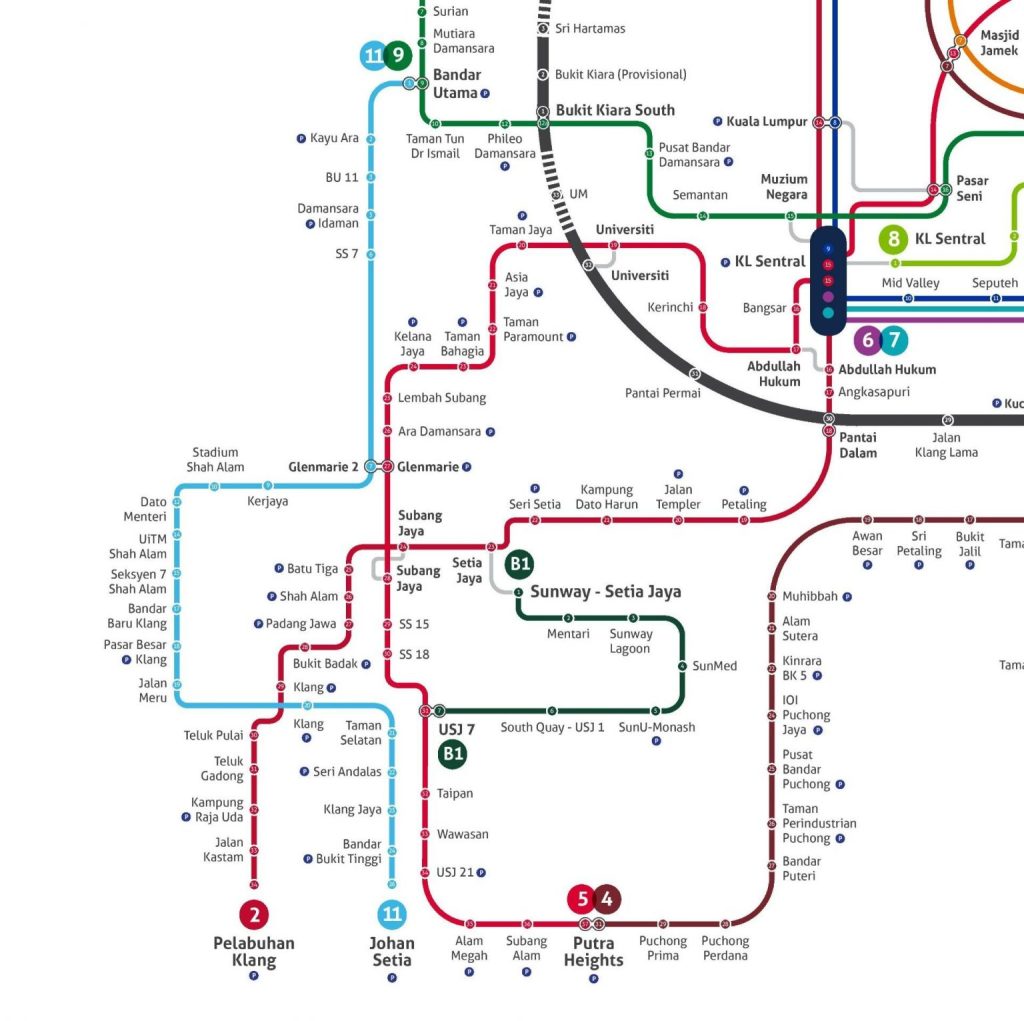
Beyond offering another commuting option, the LRT3 is expected to support wider transit-oriented development throughout the western Klang Valley. Areas surrounding many of its stations are already earmarked for higher-density residential and commercial projects, with improved public transport access likely to enhance both property values and investment potential over time.
Perhaps surprisingly, the entire line currently offers only two interchange stations. One is at the Bandar Utama northern terminus, where the LRT3 line connects to the Kajang MRT line. The other is Glenmarie, where passengers can alight and connect to the Kelana Jaya LRT line. It’s unclear if any additional interchange stations will be added in the near term.
For students, office workers, shoppers, and residents, the line also creates direct connections to major destinations including Universiti Teknologi MARA (UiTM), Bandar Utama, Subang, and central Shah Alam without relying entirely on private vehicles.
As Malaysia continues expanding its rail infrastructure – with projects such as the Johor Bahru–Singapore RTS Link due to open later this year and longer-term plans for the Klang Valley MRT Circle Line progressing – the opening of the LRT3 represents another significant step towards a more integrated public transport network.
For commuters who have watched trains undergoing months of testing while wondering when the service would finally open, that wait is now over. Beginning today, the LRT3 becomes part of everyday life for the western Klang Valley – and, for at least the next month, passengers can experience it without paying a fare.