


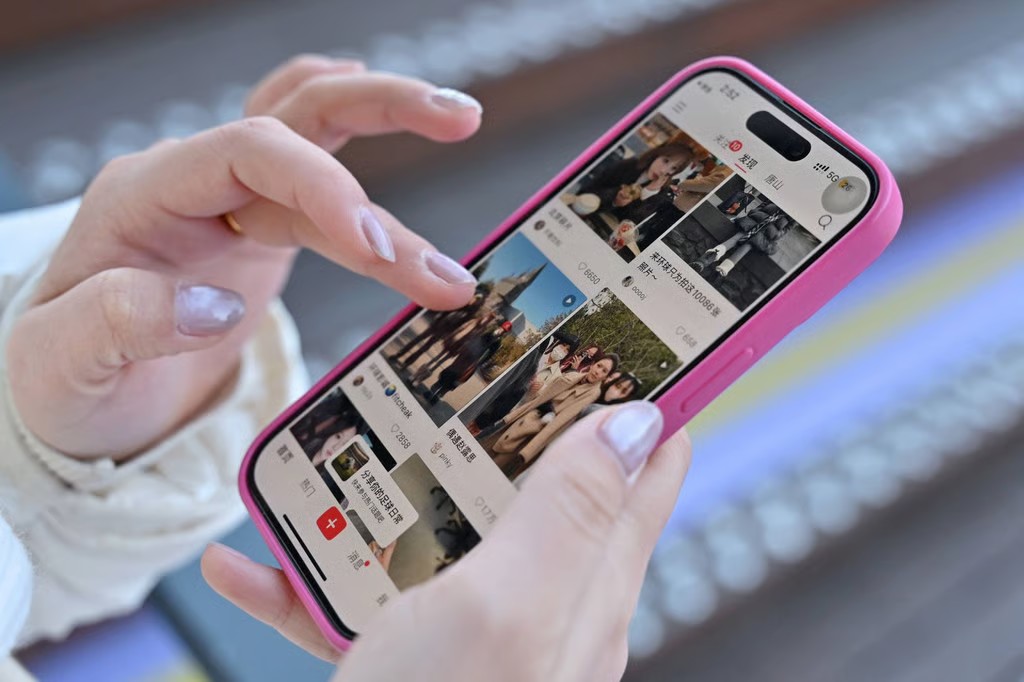
Once guided by brochures and travel agents, many Chinese visitors now plan their holidays through RedNote, or XHS. The social media platform is changing how Malaysia is discovered, promoted, and judged – for better and for worse.
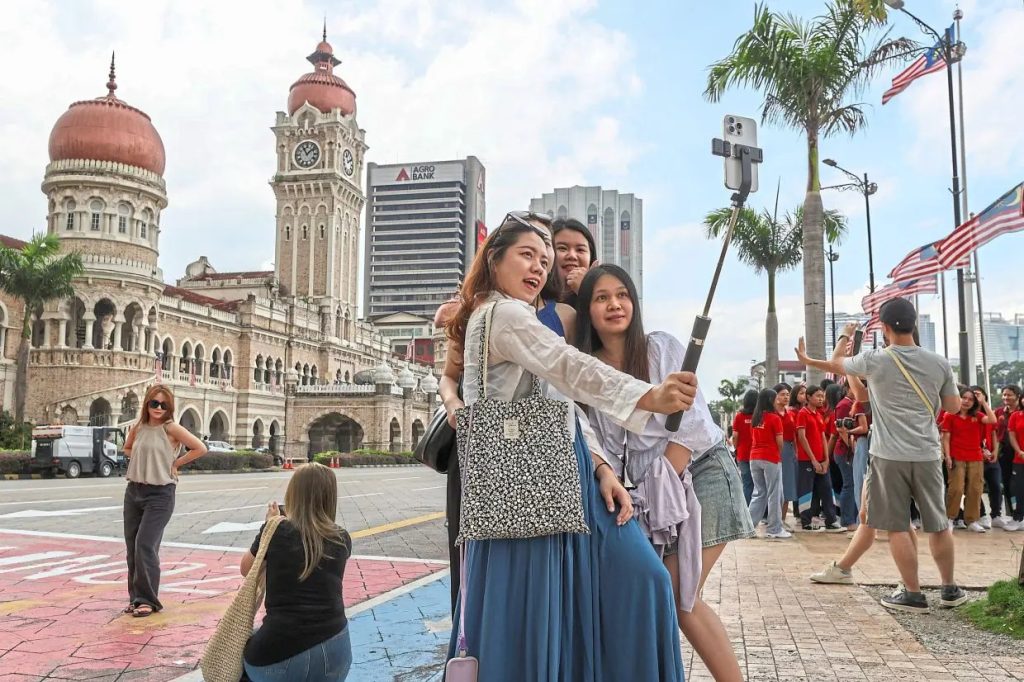
If you spend any time around Kuala Lumpur’s busiest tourist districts, you may notice visitors photographing seemingly ordinary street corners, cafés, or roadside food stalls that locals barely notice. Increasingly, these stops are not the result of guidebooks or package tours, but recommendations found on RedNote, the Chinese social media platform better known domestically as Xiaohongshu (or XHS).
According to a report by the South China Morning Post, the app has rapidly become one of the most influential travel planning tools for China’s outbound travellers, reshaping where visitors go, what they eat, and even how they perceive destinations such as Malaysia.
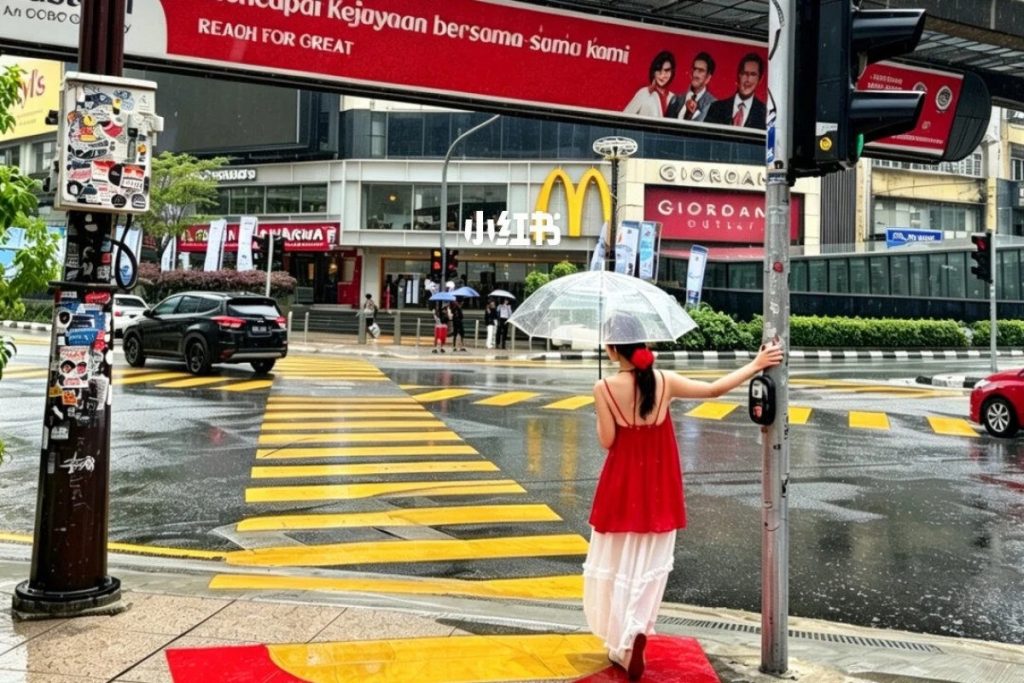
A good example can be found in the heart of Bukit Bintang. Outside a McDonald’s restaurant sits an otherwise unremarkable pedestrian crossing. To most Kuala Lumpur residents, it is simply another busy intersection. Yet for many Chinese tourists, it has become an unexpected photo stop after appearing repeatedly in RedNote travel content.
It illustrates a broader shift taking place across global tourism. Rather than relying on travel agencies, printed guidebooks, or even official tourism websites, many younger Chinese travellers now build entire itineraries around recommendations shared by other users online.
That influence is significant. RedNote reportedly handles around 600 million searches every day, while more than 130 million users actively searched for outbound travel content each month during the past year. More than 90% of those users engage with travel-related posts before deciding where to go.
Malaysia has proven particularly well suited to this style of discovery. From colourful mosques and vibrant street markets to durian stalls and towering roti tisu creations, the country offers the kind of highly visual experiences that perform well on social media. Add to that the widespread use of Mandarin among many Malaysians, and the country has become an increasingly comfortable destination for Chinese visitors.
The timing is favourable. Since Malaysia introduced visa-free entry for Chinese nationals in late 2023 – a policy that has since been extended – visitor arrivals from China have rebounded strongly, helping restore one of the country’s most important tourism markets following the pandemic.
SOCIAL MEDIA NOW DRIVES THE ITINERARY
Travel industry observers say RedNote’s influence lies not simply in its popularity, but in the way users perceive its content.
Speaking to the South China Morning Post, Sienna Parulis-Cook of Dragon Trail International noted that the platform’s vast library of user-generated posts gives recommendations an air of authenticity and trustworthiness that traditional advertising often struggles to achieve.
That makes a difference because today’s Chinese travellers are increasingly making travel decisions at short notice.
Research by Singapore-based China Trading Desk found that more than 73% of Chinese outbound tourists booked their holidays within one month of departure during 2024 and 2025. Much of this trend has been driven by Millennials and Generation Z travellers, who prefer flexibility and spontaneous decision-making over structured tour packages.
Instead of booking months in advance through travel agents, many now turn to platforms such as RedNote or Douyin – China’s version of TikTok – for inspiration while planning their trips.
For Malaysian tourism operators, this presents both tremendous opportunity and considerable risk. A single viral recommendation can transform an obscure café or neighbourhood eatery into a must-visit destination almost overnight. Equally, negative reviews can spread just as quickly. (“The app giveth, and the app taketh away,” one observer cheekily noted online.)
Just such an example came in late 2024, when a Chinese visitor’s RedNote post describing Kuala Lumpur as “boring and dirty” and suggesting the Petronas Twin Towers were the city’s only worthwhile attraction sparked widespread discussion both online and in Malaysia.
The incident highlighted how influential social media commentary has become in shaping international perceptions, regardless of whether or not those opinions represent the on-the-ground experiences of most travellers.
AN OPPORTUNITY – AND A WARNING
While RedNote’s reach offers enormous marketing potential, observers also caution that not everything users encounter on the platform is entirely organic.
According to Yi Huiran, a China-born PhD candidate at the University of Michigan’s School of Information, some promotional content falls into a regulatory grey area.
Rather than using major influencers whose commercial relationships must often be disclosed, some businesses instead work with so-called Key Opinion Consumers (KOCs) – smaller content creators (presumably downstream from Key Opinion Leaders) whose recommendations may appear to be entirely independent despite receiving compensation.
Because these creators typically have relatively modest followings, their content may not legally qualify as advertising under current rules, allowing sponsored recommendations to blend seamlessly with genuine travel advice.
The result can be misleading.
Travellers may arrive at highly recommended restaurants or attractions only to discover that the experience falls well short of social media-driven expectations. At the same time, algorithms increasingly determine which destinations receive attention, while businesses can also pay relatively small sums to increase the visibility of their content.

For destinations such as Malaysia, maintaining authenticity is increasingly important. Industry leaders have already expressed concern about unlicensed travel operators promoting packages through social media platforms, exposing visitors to scams or poorly organized tours that ultimately damage the country’s reputation.
The Malaysian Association of Tour and Travel Agents (MATTA) has previously warned that unchecked online operators could undermine confidence in Malaysia as a safe and reliable tourism destination.
None of this diminishes the extraordinary marketing power of platforms like RedNote. On the contrary, its influence is likely to continue growing as younger travellers increasingly rely on peer recommendations rather than conventional tourism marketing.
For tourism authorities and businesses alike, however, it also represents a reminder that reputation is now built – and sometimes undone – one social media post at a time. Whether that will be the case in the long term is of course unknown.
For now, though, in today’s digital travel economy, the elusive “algorithm” has become as influential as the travel brochure once was. And while RedNote can place an overlooked Malaysian attraction firmly on the tourist map almost overnight, it can just as quickly steer visitors somewhere else. In a world of hyper-connectedness, tourism’s reliance on social media really is a double-edged sword.