



WhatsApp is preparing one of its biggest identity changes in years, allowing users to connect without revealing their phone numbers. Here’s how the new username system will work – and why it matters.
If you launched WhatsApp recently, you may have received a notice inviting you to “reserve” a username. If so, you’re among the first to see what is shaping up to be one of the messaging platform’s biggest privacy-focused updates in years.
WhatsApp has confirmed that it will begin rolling out usernames globally over the coming months, giving users a new way to connect without sharing their mobile phone numbers. The change marks a significant shift for the Meta-owned messaging service, which has traditionally relied on phone numbers as the primary way to identify and contact users.
With more than three billion users worldwide, WhatsApp has become one of the world’s most widely used messaging platforms. While its end-to-end encryption has long been a cornerstone of its privacy credentials, many users have remained uncomfortable with having to reveal their actual phone numbers when joining large group chats, contacting businesses, or communicating with people they do not know personally.
The introduction of usernames is designed to address that concern.
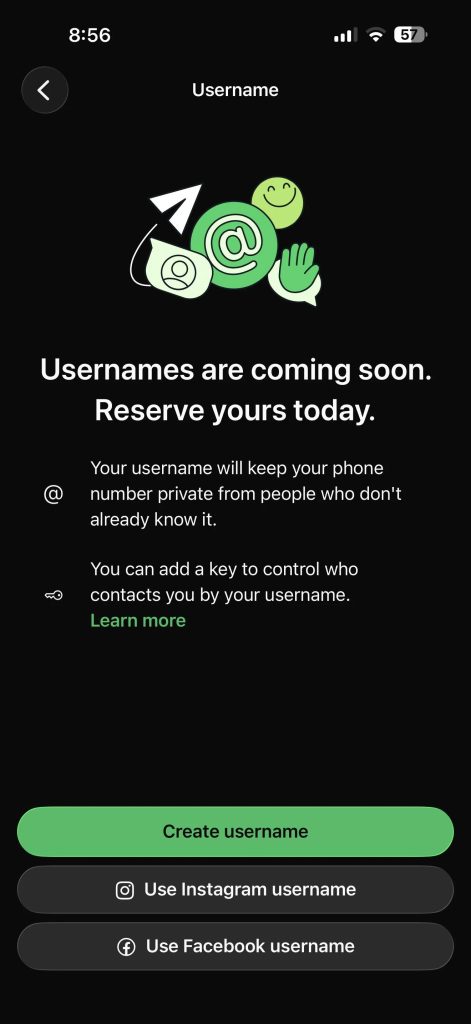
MORE PRIVACY, LESS EXPOSURE
Instead of exchanging phone numbers, users will be able to create a unique username that others can use to find and message them. Their mobile number will remain hidden unless they choose to share it separately, providing an additional layer of privacy without changing how conversations themselves are protected.
The feature is expected to be particularly useful in situations where users interact with people outside their existing contact lists, such as community groups, clubs, events, online marketplaces, or business enquiries.
According to Meta, the new system has been designed with privacy in mind. Unlike many social media platforms, WhatsApp will not offer a searchable public directory of usernames, nor will it suggest accounts for users to browse.
Instead, someone wishing to contact another person will need to know that individual’s exact username.
The approach is intended to reduce unwanted contact while making it easier to communicate without exposing personal information. It also aligns WhatsApp more closely with other messaging services such as Telegram, Signal, and Discord, all of which already allow users to connect through usernames rather than phone numbers alone.
Given WhatsApp’s enormous global user base, however, securing a preferred username may prove challenging. Just as with email addresses or social media handles, each username must be unique, meaning many popular names are likely to be claimed quickly.
YOUR FACEBOOK OR INSTAGRAM USERNAME MAY BE AN OPTION
To help maintain consistency across Meta’s family of platforms, the company says creators, organizations, and businesses will have the opportunity to reserve usernames that match those they already use on Facebook or Instagram, making it easier for customers and followers to identify official accounts. It’s unclear if users will have “first right of refusal” on these usernames. If not, they’ll need to grab them quickly, particularly if it’s a more common name that might be reserved first by someone else.
The rollout itself will be gradual, with users receiving notifications within WhatsApp when the feature becomes available in their country. This phased approach allows Meta to monitor the launch while managing demand across billions of accounts.
Although the change may appear relatively minor on the surface, it represents one of the most significant updates to WhatsApp’s identity system since the service was launched. For years, users have effectively treated their phone numbers as their online identities within the app. The introduction of usernames separates those two elements, offering greater flexibility while reducing the amount of personal information that must be shared during everyday conversations.
The update also reflects a broader trend across the technology industry, where companies are placing increasing emphasis on giving users greater control over their personal data. As concerns surrounding online privacy, spam, scams, and unwanted contact continue to grow, features that minimize the amount of information shared (or inadvertently exposed) by default have become increasingly attractive.
For everyday users, the practical impact may simply be greater peace of mind. Whether joining a neighbourhood group, contacting a business, or meeting someone through a shared interest, conversations can begin without immediately exposing a personal phone number. For most users, that’s going to be seen as a good thing.
As WhatsApp continues rolling out the feature over the coming months, users should expect to see prompts inviting them to choose and reserve their preferred username. Given the platform’s sheer size and vast reach, those hoping to secure a simple or highly sought-after handle will definitely want to act sooner rather than later.