


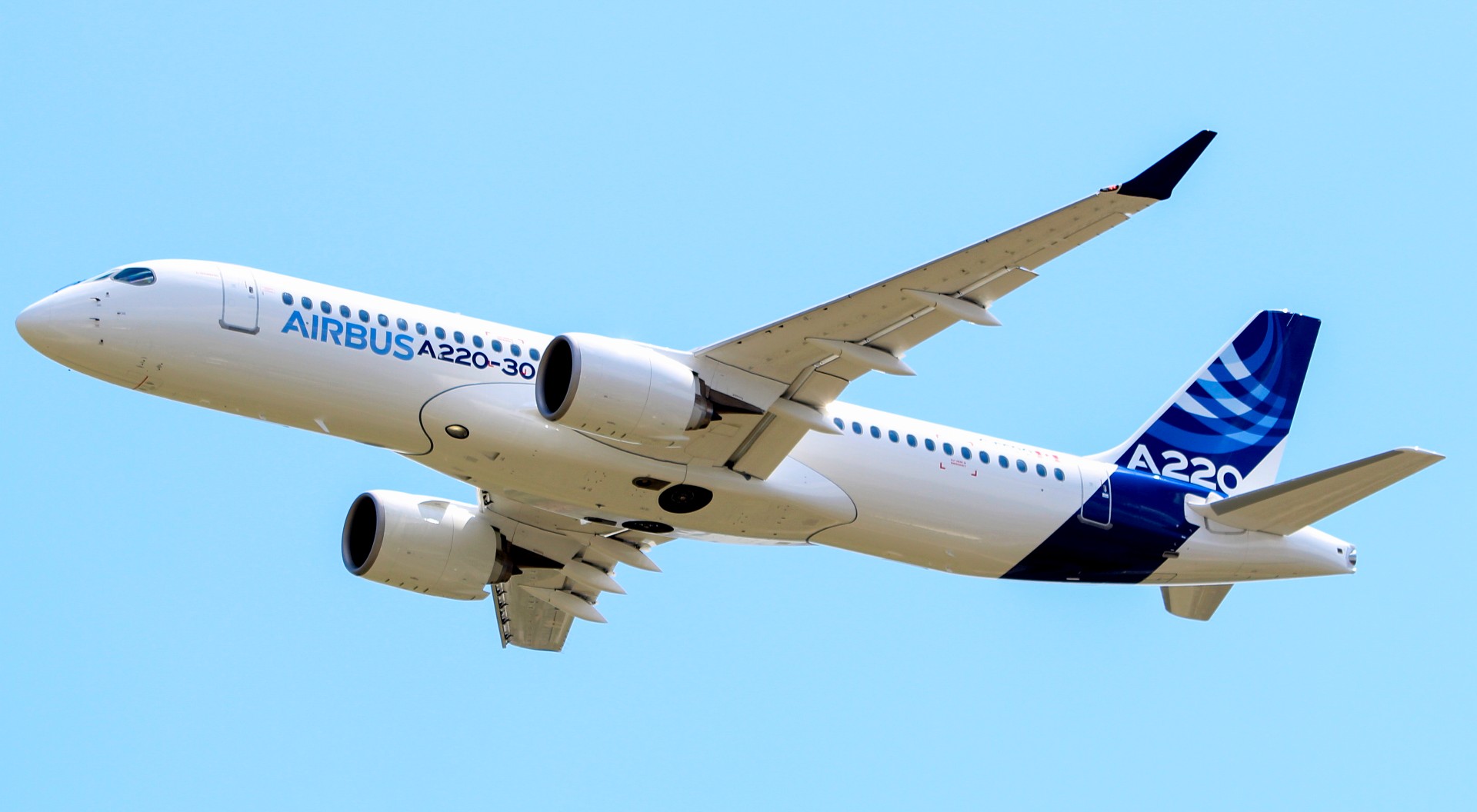
Even as soaring fuel prices rattle the airline industry, AirAsia is doubling down on growth with a record-breaking Airbus order, plans for a new airline, and ambitions to create what Tony Fernandes calls the world’s first true low-cost network carrier.
Aviation enthusiasts know this well: Malaysia’s AirAsia has never exactly been known for cautious thinking, and founder Tan Sri Tony Fernandes appears determined to prove that point yet again. At a time when soaring fuel costs, geopolitical volatility, and financial strain are forcing many airlines into defensive mode, the low-cost aviation giant is instead pressing aggressively ahead with expansion plans that include a record-setting aircraft order and even the launch of a new airline.
The centrepiece of that strategy is AirAsia’s blockbuster agreement to purchase 150 Airbus A220 aircraft, a deal valued at roughly US$19 billion (about RM75 billion) at list prices. The order represents the single largest purchase ever placed for the A220 programme and pushes total global orders for the aircraft beyond the 1,000 mark.
While the actual transaction value is almost certainly far lower after customary airline discounts, the symbolism of the order is unmistakable. AirAsia is betting heavily on the future of regional aviation growth in Asia, even as the industry wrestles with volatile fuel prices and economic uncertainty.
For Airbus, the deal is a major endorsement of an aircraft programme that has steadily gained traction in recent years. Originally developed by Bombardier as the CSeries before Airbus assumed control of the programme in 2018, the A220 has carved out a strong reputation for fuel efficiency, passenger comfort, and operational flexibility.
The aircraft also has significance far beyond Malaysia or Toulouse (where Airbus is based). The A220’s wings and mid-fuselage are manufactured in Belfast, where Airbus operations remain one of Northern Ireland’s most important industrial employers. Around 1,500 people work directly for Airbus there, with thousands more jobs supported through the wider aerospace supply chain.
Airbus only fully acquired the Belfast operation in 2025 following the breakup of Spirit AeroSystems, while Boeing separately acquired other parts of the facility. Earlier this year, Airbus chief executive Guillaume Faury said the company was “committing a lot of cash” into Belfast to support increased A220 production as global demand ramps up.
“It’s very important to be successful on the ramp-up, to be with a high level of quality, and to be competitive,” Faury said, adding that Belfast had to maintain a “front foot forward” approach to contribute successfully to the programme.
NEW ROUTES, NEW AIRLINE, NEW BETS
For Fernandes, however, the appeal of the A220 goes well beyond manufacturing politics or industrial prestige. The aircraft’s smaller size and longer range compared to some traditional narrowbody jets opens up a whole range of route possibilities that previously may not have made commercial sense for AirAsia.
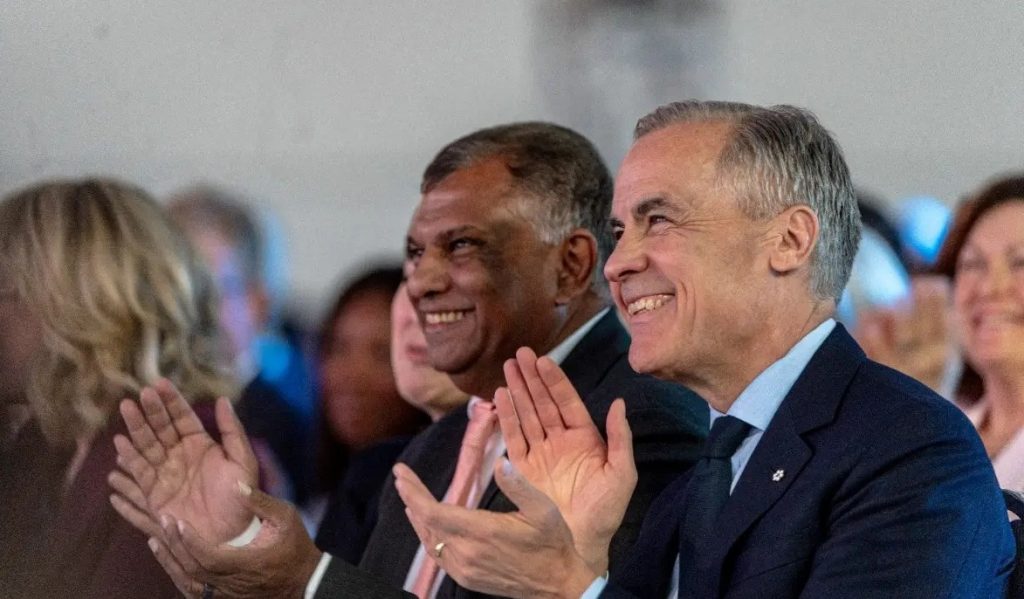
“The A220 unlocks new markets and routes and brings us closer to building the world’s first true low-cost network carrier,” Fernandes said.
That ambition appears increasingly expansive. Speaking in Montreal shortly after the aircraft deal was announced, Fernandes revealed that he is preparing to launch an entirely new airline within the next couple of months. While details remain tightly under wraps, he indicated that aircraft are already being repositioned for the operation.
AirAsia has also been linked to potential expansion in Vietnam and has separately announced plans to launch flights from Bahrain, where it hopes eventually to establish a Gulf-based unit. Combined with its existing operations in Malaysia, Thailand, Indonesia, the Philippines, and Cambodia, the airline group’s footprint across Asia and beyond continues to widen.
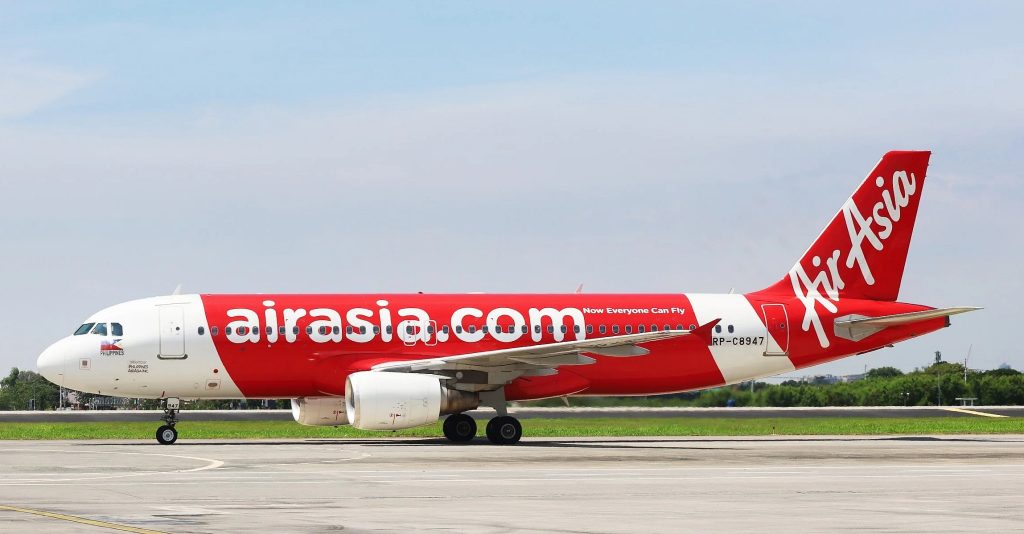
If successful, the latest Airbus order would eventually expand AirAsia’s aircraft backlog to roughly 550 single-aisle jets.
The scale of the expansion is particularly striking given current market conditions. The aviation industry has been battered in recent months by sharply rising fuel prices linked to tensions in the Middle East, with many carriers scrambling to contain costs and reduce exposure.
AirAsia itself has hardly been immune. Shares linked to the airline group have fallen sharply since the Iran conflict intensified, making it one of the weakest-performing airline stocks globally during that period. Fuel represents one of the largest operating costs for any airline, and AirAsia has long taken an unconventional approach by largely avoiding fuel hedging strategies that many rivals rely upon to smooth out price fluctuations.
Fernandes remains unapologetic about that stance.
“Obviously people who hedge now are in the money, but over a longer period, hedging never really works,” he said. “So we continue to not hedge like many American airlines and we feel oil is bearish.”
Whether that confidence proves well-founded remains to be seen. In the near term at least, Fernandes acknowledged that the airline is likely to miss its earlier profit targets for the year, though he suggested revenue should remain broadly in line with projections.
THE HIGH-RISK AIRASIA PLAYBOOK
If there is one thing the AirAsia story has consistently demonstrated over the past two decades, it is that Fernandes is willing to make bold bets precisely when others become cautious. Sometimes that strategy has paid off spectacularly. Occasionally, it has looked perilously risky.
The airline itself famously emerged from a struggling state-owned operation purchased for the token sum of one ringgit in 2001 before transforming into one of Asia’s defining low-cost success stories. Since then, AirAsia has weathered financial crises, the pandemic, rising competition, and repeated industry shocks while continuing to pursue growth and excellence in the low-cost airline sector.
That appetite for expansion is continuing even now. To help finance its latest ambitions, AirAsia is reportedly preparing a bond issuance worth up to US$600 million (around RM2.4 billion), while simultaneously negotiating sizeable refinancing arrangements with Malaysian banks aimed at reducing borrowing costs. Fernandes has also indicated he plans to court Canadian pension funds and other institutional investors.
There is also growing speculation within the aerospace industry that Airbus may soon unveil a stretched version of the A220 capable of carrying close to 200 passengers. AirAsia has already publicly expressed interest in such an aircraft and hinted it could potentially place another order for as many as 150 additional jets if the programme moves forward.
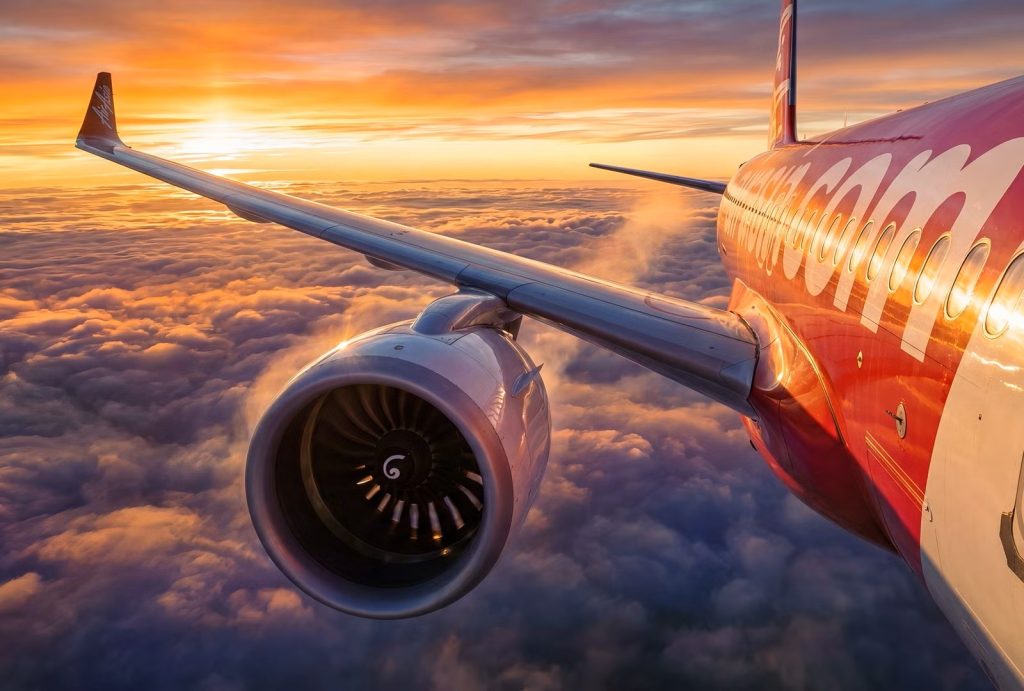
For now, though, the existing order alone represents one of the aviation sector’s most eye-catching commitments in years.
At a time when many airlines are pulling back, AirAsia is effectively doing the opposite: expanding routes, adding aircraft, seeking new markets, and preparing a fresh airline launch while much of the industry remains preoccupied with cost containment.
It is certainly a gamble. But then again, few companies in aviation have ever embodied the “why waste a crisis?” philosophy quite as enthusiastically as AirAsia.
Sources: BBC News, Bloomberg, The Edge Malaysia, Airbus corporate information, public aviation industry reports.