


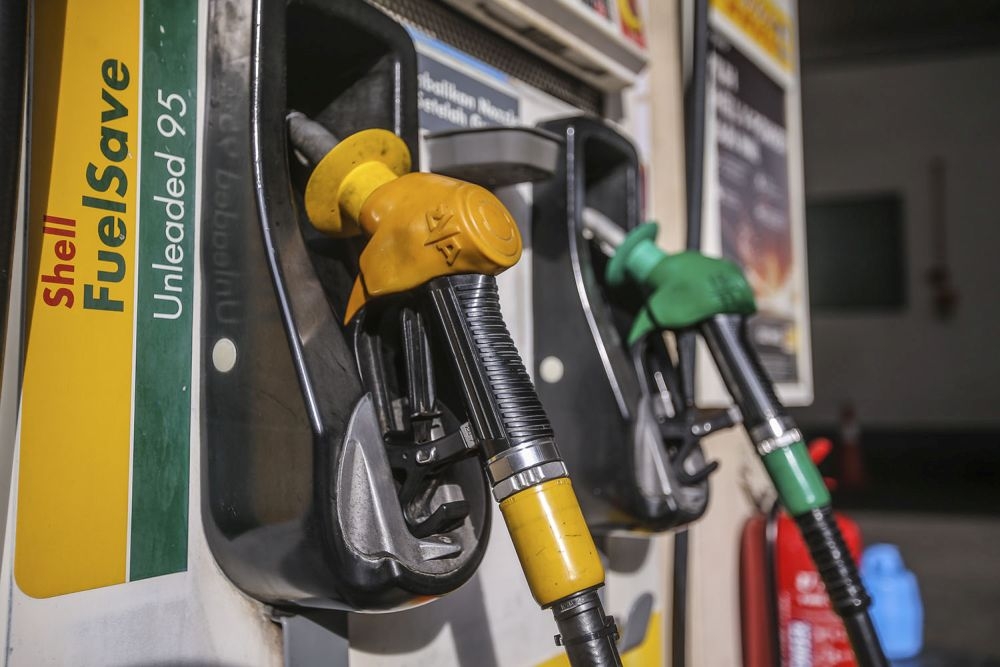
For decades, subsidies have helped cushion Malaysians from rising living costs, particularly at the petrol pump. But as global energy prices fluctuate and fiscal pressures mount, the government’s gradual shift toward targeted assistance is revealing just how difficult – and politically sensitive – subsidy reform can be.
In recent days, the Malaysian government has said it’s considering another change to its fuel subsidy approach, this time looking to eliminate those in the T20 income bracket – the top 20% of earners in Malaysia – from receiving the benefit. It’s just the latest potential tweak to a fuel subsidy programme that has been in a state of relative flux for over a year now.
For some critics, it all points to what they say has been the case all along, namely that keeping prices artificially low is not fiscally sustainable, and in some cases, may not be a wise move even in the shorter term.
Malaysia’s long-running relationship with subsidies has always been something of a balancing act. On one hand, subsidies help shield ordinary people from inflation and economic shocks. (And who among us doesn’t like low prices on goods and services?) On the other hand, though, subsidies create enormous fiscal burdens, distort markets, encourage waste, and, let’s be honest, become politically difficult to unwind once the voting public grows accustomed to those appealing, but artificially low prices.
That balancing act is now becoming increasingly precarious.
A MOVING TARGET WITH MANY VARIABLES
After years of discussing subsidy rationalization, the Malaysian government has spent much of the past year effectively recalibrating its approach in real time. Fuel subsidies, in particular, have become a moving target as policymakers attempt to reduce leakages, limit abuse, and contain mounting costs without triggering widespread public anger.
As a result, the fuel subsidy programme landscape is looking increasingly fragmented. Diesel is subsidized in East Malaysia, but not on the Peninsula. Some people get cash assistance, some don’t. That monthly figure has been changed for some, but not for others. RON95 is subsidized, but only for eligible Malaysian motorists, and the monthly allocation differs, depending on your job (e-hailing drivers get much more, for example). That allocation was recently reduced for most Malaysians, but maintained for some. The reduction was initially said to be short-term only, but observers are noting that it looks to be more of a permanent move. One grade of fuel is reserved only for Malaysian-registered vehicles, but other grades can be used by any vehicle. Unevenly available fleet cards, IC abuse, social media vigilantism, and ineffective communication have led to plenty of confusion – and this is all just in the last few months.
The latest focus, which will fragment the overall scheme even more, is on removing or reducing fuel subsidies for Malaysia’s so-called T20 income group – the top 20% of earners. But the reality is proving more complicated than simply drawing a line between “rich” and “not rich.”
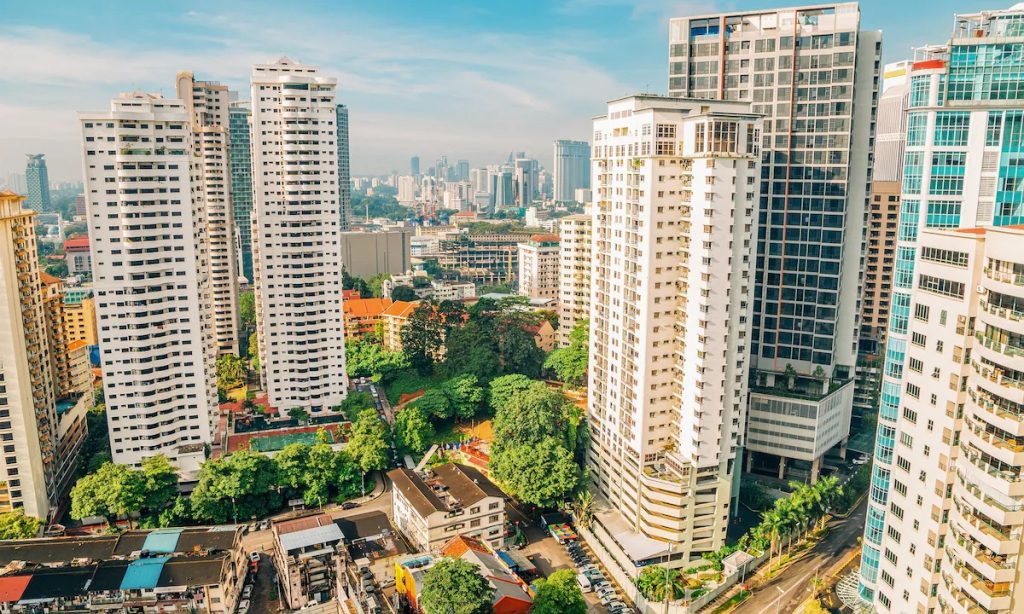
Officials have acknowledged that identifying who should and should not receive subsidies is not always straightforward, particularly in urban areas where higher household incomes are often offset by substantial living expenses. When we checked to find out what threshold would be used for determining the T20, the most frequent answer was, “It depends.” The T20 in rural Kelantan, for example, is marked by very different economic realities than the T20 in Kuala Lumpur. So based on some cursory exploration, that threshold could be RM11,000 per month according to some sources, but as much as RM17,000 per month according to others.
Malaysia’s challenge is very real in this respect because many people in the T20 are not necessarily wealthy in the way the term sometimes implies. In high-cost urban areas, as noted above, households can cross into T20 status while still feeling financially stretched due to mortgages, education costs, private healthcare, childcare, and higher transportation expenses. Even something as seemingly harmless as zoning can materially impact a household’s disposable income. For example, a condo in a commercially zoned area (think “serviced apartment”) will have considerably higher electricity rates than a condo sited on a residentially zoned plat of land due to the rates charged. So while two households in those different condos may have similar incomes and lifestyles, the simple category of how their property is zoned can make a difference in how much disposable income they have to enjoy each month.
And what about multigenerational households? Income-based policymaking is often based on a household’s income rather than an individual’s. But that can easily introduce inequity in some circumstances. One household comprising two or three generations in the same family could have four or five working adults in their home, collectively putting their household income well into the T20 bracket, while their neighbours, whose lifestyle is very similar economically, may only have one or two working adults, thus keeping them out of the topmost bracket.
These are just some of the questions facing government officials who consider this latest change, and that’s even before addressing the complex issues and costs of implementation and enforcement.
THE HIGH COST OF KEEPING PRICES LOW
Of course, Malaysia’s subsidy system stretches well beyond fuel. Not everyone may be aware, but the government subsidizes cooking oil, electricity, chicken, rice, flour, public transport, healthcare, and more. Historically, these measures were designed to maintain affordability and social stability, particularly during periods of economic volatility.
But blanket subsidies come with at least one major structural flaw: everybody benefits, regardless of need.
That means wealthy households consuming significantly more fuel and electricity often receive disproportionately larger benefits than lower-income Malaysians. The World Bank recently described Malaysia’s fuel subsidies in particular as “regressive,” noting that higher-income groups consume substantially more subsidized fuel than poorer households.
The fiscal implications for the country are enormous, and though the figures weren’t broadly known in decades past, the realities are so pronounced now that the strain on Malaysia’s budget has made it “front and centre” news on many occasions.
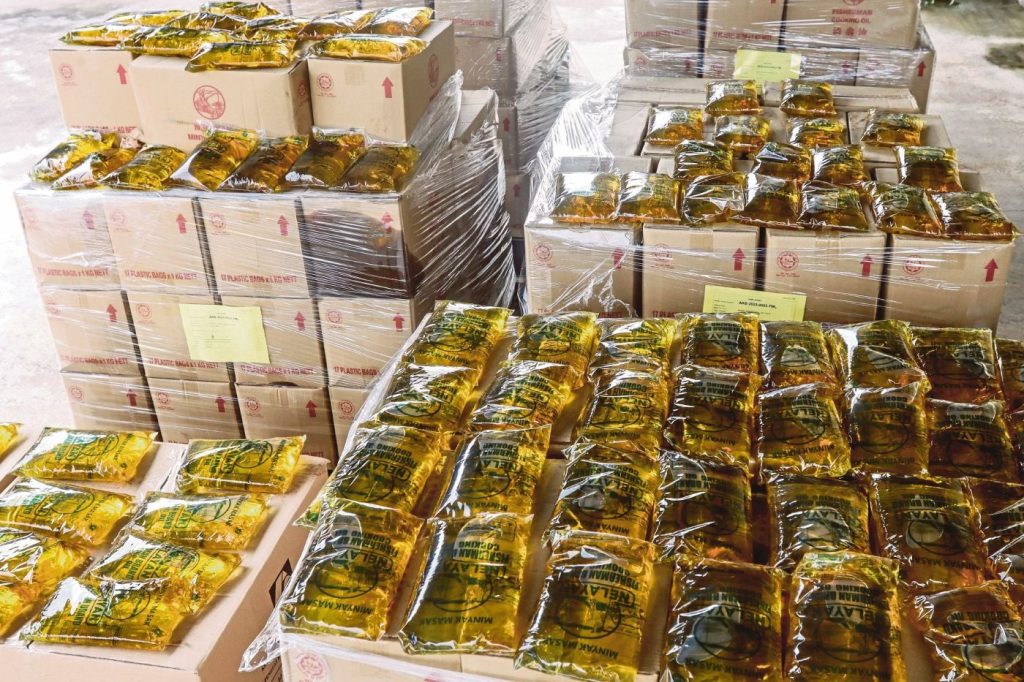
Malaysia now repeatedly spends tens of billions of ringgit annually on subsidies. During periods of elevated oil prices, the numbers climb dramatically. According to recent Finance Ministry statements, the government has at times been absorbing subsidy costs in the last few months ranging from RM3 billion to RM7 billion per month simply to maintain subsidized fuel prices.
At those levels, subsidies begin crowding out other forms of public spending.
What this means is that money a government uses to artificially suppress fuel prices is money that cannot be spent on infrastructure, healthcare improvements, public transport upgrades, education, or targeted social assistance. Of course, publicly funded projects that are less critical (such as parks, urban beautification, or public service campaigns aimed at improving quality of life) are the first to be cut.
Accordingly, economists have long argued that broad subsidies are an inefficient way to help lower-income households because a large portion of the benefit flows to those who arguably do not need assistance, and that the cost of these subsidies mean other initiatives are not getting funded.
However, the flip side of that stance, as some argue, is that as wealthier citizens pay considerably more in taxes, they should enjoy some benefits from publicly distributed subsidies. (We would also add that working, tax-paying expats fall into this category, as well.) These critics also argue that, in some cases, providing broad subsidies to lower-middle-income earners can serve to disincentivize them from pursuing any upward economic mobility. It’s a nice way of saying subsidies work to keep poor people poor, though that of course overly simplifies things. But basically, many economists, public policy experts, and social scientists do acknowledge that poorly designed subsidies and welfare systems can sometimes create what are often called “dependency traps” or “poverty traps.”
And of course, a perhaps even more pointed problem – at least here in Malaysia – is the large-scale smuggling of subsidized goods to neighbouring countries. Though the occasional Singaporean uncle pumping RON95 at a station in Johor Bahru makes headlines and spurs plenty of indignant, populist outrage, that offence is nothing compared to the millions of litres of diesel and petrol that were being smuggled out of Malaysia on a daily basis prior to subsidy reforms. Those changes helped, but the problem still exists, and curtailing the leakages remains a daunting task.
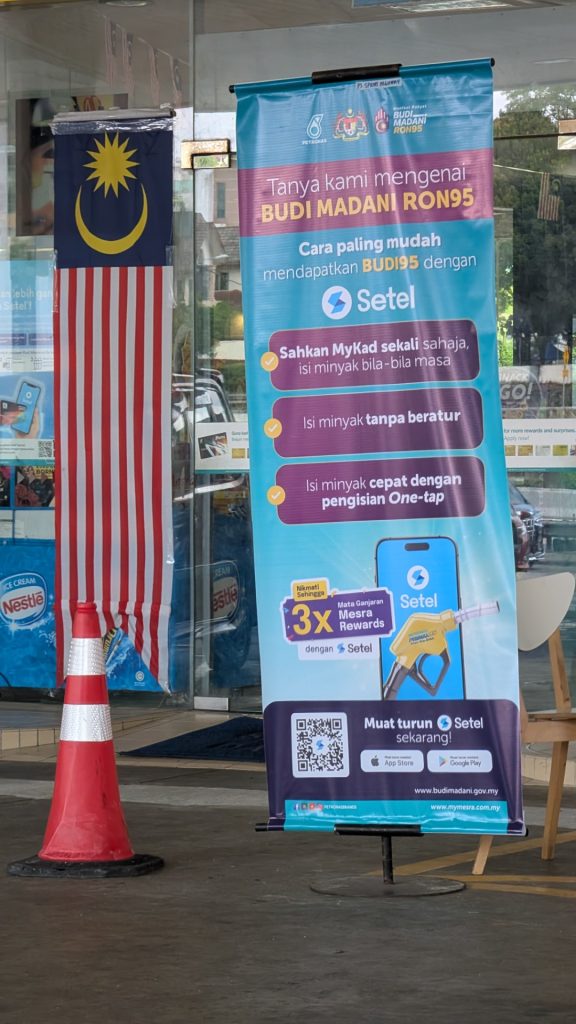
Malaysia’s diesel subsidy rationalization in 2024 offered a preview of the challenges involved. While the reforms generated savings and indeed reduced smuggling incentives, they also sparked anxiety over rising transport and business costs. Since then, the government has moved cautiously, introducing the BUDI MADANI system and gradually refining how fuel subsidies are distributed.
The current framework already distinguishes between subsidized and unsubsidized fuel pricing in some contexts. Malaysian citizens purchasing subsidized RON95 under approved schemes continue to enjoy controlled pricing, while foreigners and non-eligible users pay higher market-linked rates. While that price is still lower than in some neighbouring countries, it’s still currently more than double the subsidized cost.
Still, every adjustment seems to produce new complications. Beyond the political sensitivities, there can also be a real economic risk, too.
Cap monthly fuel purchases too aggressively, and middle-class commuters complain. Remove subsidies too quickly, and inflation risks accelerate. Delay reforms, meanwhile, and the government continues haemorrhaging public funds at a level that becomes not just burdensome, but damaging.
It is, frankly, the sort of problem created by decades of political reluctance to confront economic reality head-on.
SUBSIDIES: A MIXED BAG – AND ALWAYS A TRADE-OFF
None of this means subsidies are inherently bad. Far from it.
Targeted subsidies can be highly effective when deployed carefully. Assistance aimed at low-income households, essential food items, healthcare access, or vulnerable industries can provide meaningful economic stability and social protection. During crises – including pandemics, recessions, or sudden commodity shocks – temporary subsidies can also help prevent severe hardship.
The issue is sustainability.
Blanket subsidies become especially problematic when they distort consumer behaviour. Cheap fuel, for example, reduces incentives for energy efficiency, public transport adoption, or lower consumption. It also quite obviously encourages leakages, smuggling, and cross-border arbitrage, particularly in a country where fuel prices are often dramatically lower than neighbouring markets. (For example, at the time of publication, Thailand’s RON95 equivalent is roughly RM6.55/litre, while Singapore’s is an eye-popping RM9.60/litre. Even the unsubsidized RON95 price in Malaysia is far less, currently RM4.02/litre, while subsidized petrol remains held at RM1.99/litre.)
Malaysia’s longstanding fuel controls have repeatedly faced such problems, especially in border regions.
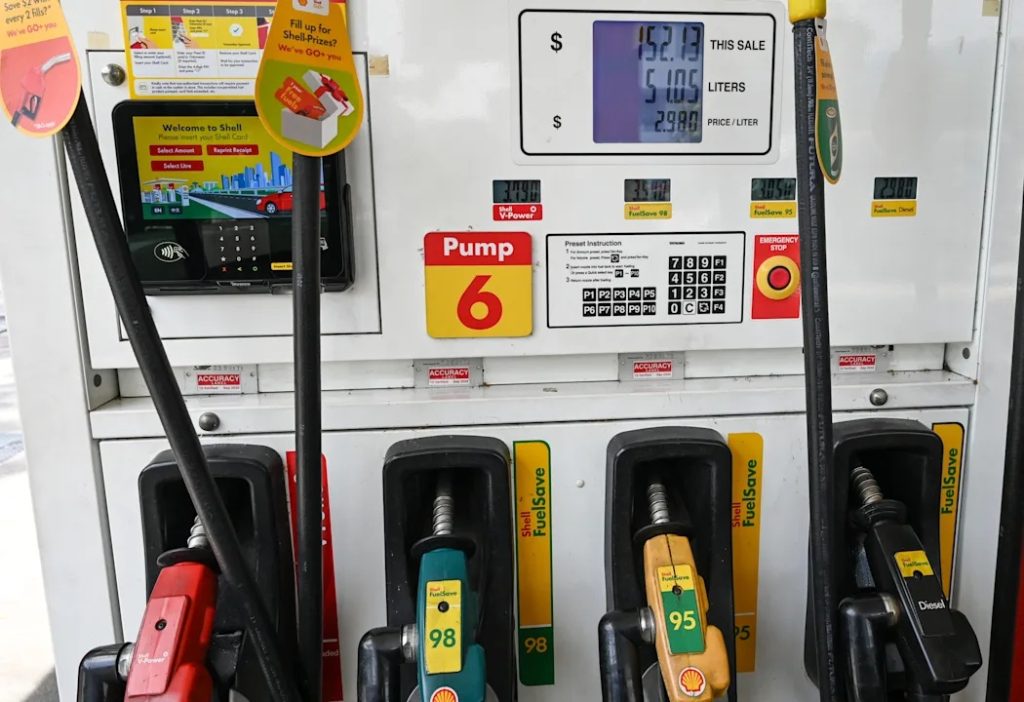
Even politically, subsidy reform is extraordinarily difficult because the effects are immediate and visible. Consumers notice petrol prices instantly. They notice more expensive chicken or cooking oil pretty quickly, as well. The long-term benefits of fiscal reform, however, are far less tangible and rarely as immediately obvious.
That leaves governments caught between economic prudence and political survival.
Malaysia is hardly alone in facing this challenge. Countries around the world have struggled to reform entrenched subsidy systems. Indonesia, long known for massive fuel subsidies of its own, has periodically implemented painful rationalization programmes. Many Gulf states have also gradually scaled back energy subsidies in recent years.
Malaysia’s current approach appears designed to avoid sudden shocks. Rather than abruptly eliminating subsidies, policymakers are slowly narrowing eligibility, reducing leakages, and experimenting with more targeted distribution systems.
Whether that gradual approach succeeds remains to be seen. A growing number of critics seem to think the only solution is to migrate away from subsidies at a larger scale. One group advocates a targeted ceiling for fuel subsidies, covering just RM1 per litre while the balance is set by market rates. Another has suggested simply reducing the subsidy slowly and incrementally towards a more realistic price that, while still subsidized, does not overly burden the government’s budget.
What is increasingly clear, however, is that the old model – broad, generous subsidies insulated from market realities – is becoming harder to sustain in a world of volatile commodity prices, rising debt pressures, and tighter fiscal conditions.
For years, subsidies have helped Malaysians feel insulated from global price movements. But economics eventually has a way of catching up. Fiction gives way to reality, and consequentially, Malaysia now finds itself confronting a difficult truth: keeping prices artificially low forever may simply no longer be affordable.
Sources: Ministry of Finance Malaysia, Reuters, AP News, World Bank Malaysia Economic Monitor, Bernama, Malay Mail, and NST Online, along with public economic commentary and policy discussions on Reddit Malaysia.